Copenhagen Airport (CPH) stands at the forefront of bird strike prevention.
Flanked by sea, forest, farmland, and wildlife reserve, the airport lies within one of Northern Europe’s most active bird corridors.
Tackling the elevated risk of bird strikes demanded an informed and innovative approach. That’s why, in 2018, CPH became the first adopter of Robin Radar’s 3D, 360° bird radar, MAX, and the world’s first airport to deploy it.
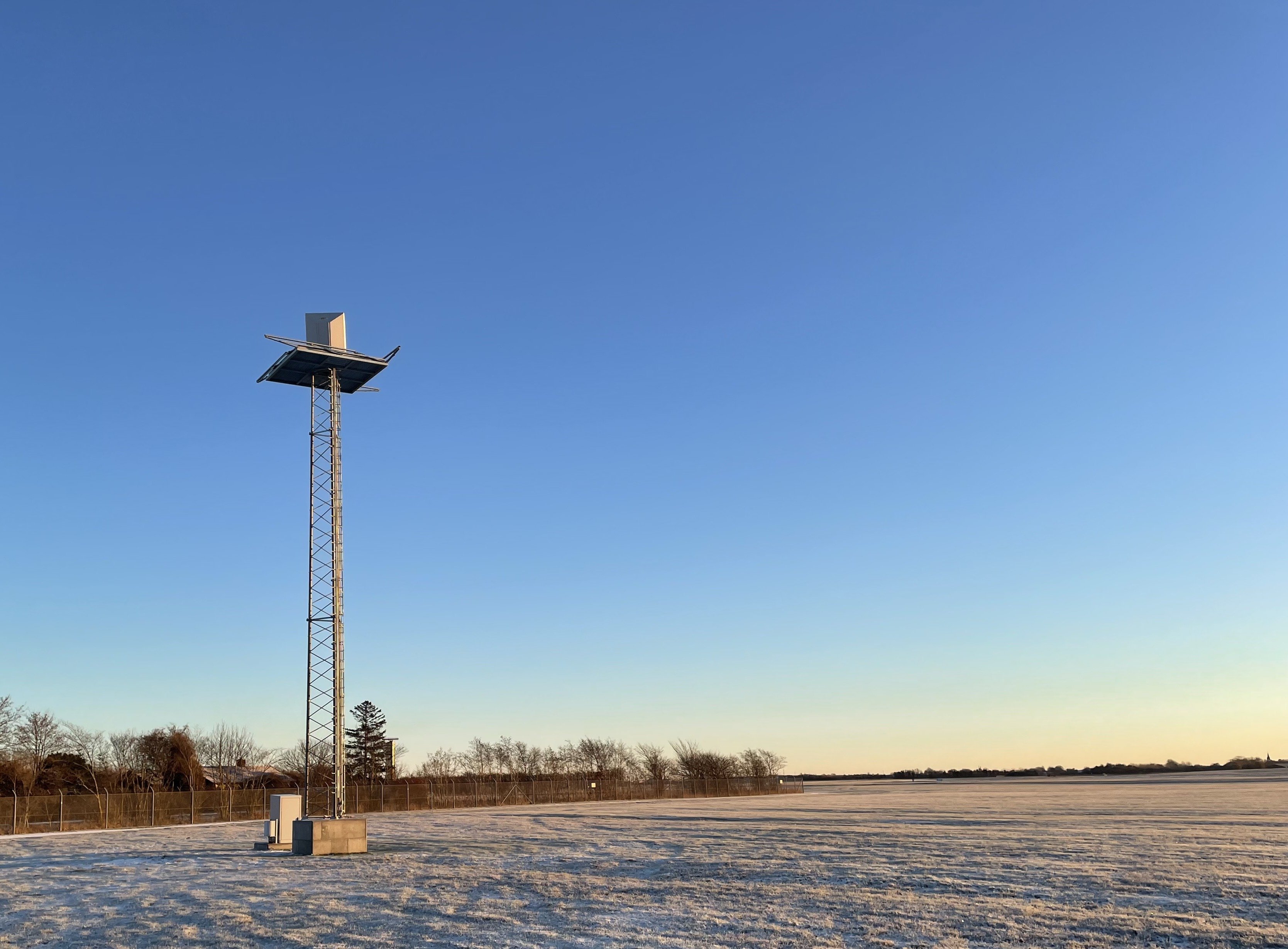
In 2022, the airport expanded its coverage and detection capability by adding another MAX to form a unique networked dual radar system. Today, it’s central to a wildlife management strategy that keeps the airport ahead of risk.
Soaring Bird Strike Risk: Barnacle Geese
Denmark has a strong environmental stewardship. CPH’s surroundings provide an ideal environment for both resident and migratory bird species.
To the south lies Kalvebod Fælled, a protected nature reserve and bird sanctuary. The island of Saltholm sits just across the Øresund Strait to the north, an internationally important stopover site for waterfowl and migratory species.
Bird strikes form a persistent risk, particularly as populations of large migratory species increase. Barnacle geese are among the most pressing threats. These large birds, often flying in dense flocks, can damage aircraft or even destroy jet engines on impact.

In recent decades, barnacle goose numbers have surged. In the 1980s, an estimated 200,000 barnacle geese migrated through Denmark each year. Today, that number exceeds 500,000. Experts project populations could reach 3 million within the next decade (Professor Jesper Madsen, Aarhus University).
To make skies safer, CPH decided to build upon a strategy of visual observation. MAX was brought in to give teams unprecedented awareness and the ability to monitor bird movement in and surrounding critical airspace.
MAX: Advanced Avian Radar for 360° Awareness
In 2018, Copenhagen became the first Robin partner and airport to install MAX. The radar was positioned at the eastern part of the airport to monitor the Øresund coast and Saltholm Island.
MAX provides 360°, 3D coverage, continuously tracking thousands of birds in real time and detecting altitude, speed, direction, and size. Equipped with an ADS-B receiver, wildlife control teams gain access to aircraft data, creating a fuller picture of bird and aircraft activity in shared airspace.
With this insight, teams can visualise flight paths, log observations such as species groups, and potentially make key decisions about aircraft operations or bird dispersal actions.
“In 2018, Copenhagen Airport took a major step toward flight safety by introducing a bird radar designed to monitor avian activity in real time.
“This technology delivers data on migration patterns and bird concentrations, supporting the wildlife control team in their work to reduce bird strikes by enabling earlier detection and more effective response.”
Dorte Nygaard, Senior Director, Safety & Compliance Monitoring Manager, CPH
Beyond real-time detection, MAX also stores and organises historical data. Environmental assessments, trend analyses, and wildlife hazard management strategies are backed by long-term insight from the system’s extensive database.
As migratory patterns shifted westward, CPH took decisive action to extend radar coverage into the agricultural and wetland zones of Kalvebod Fælled. In December 2022, a second MAX radar was installed on the south-west side of the airport site.
Networked Radar: Doubling Down with a Dual System
The two radar systems, MAX1 (East) and MAX2 (West), now operate in tandem, merging data into a single real-time interface. Unique in its configuration, the system’s architecture and data-processing workflows were built from scratch.
“The second radar covers large parts of southern Amager, where barnacle geese and other bird species often cross flight corridors,” Dorte adds. “The decision to invest in MAX2 was motivated by the goal of providing full coverage, including the airport’s south-western sector.”
Months of calibration, testing, and fine-tuning meant that MAX1 now actively incorporates MAX2’s operation to form one unified system. This extends range across land and sea while merging detections in areas of overlapping coverage.
MAX1 is focused on the Øresund and Saltholm corridor, monitoring birds approaching from the sea to give the earliest possible warning of migration events. MAX2 targets farmland and marshland to the southwest, key staging areas where flocks of barnacle geese and other species rest and feed.
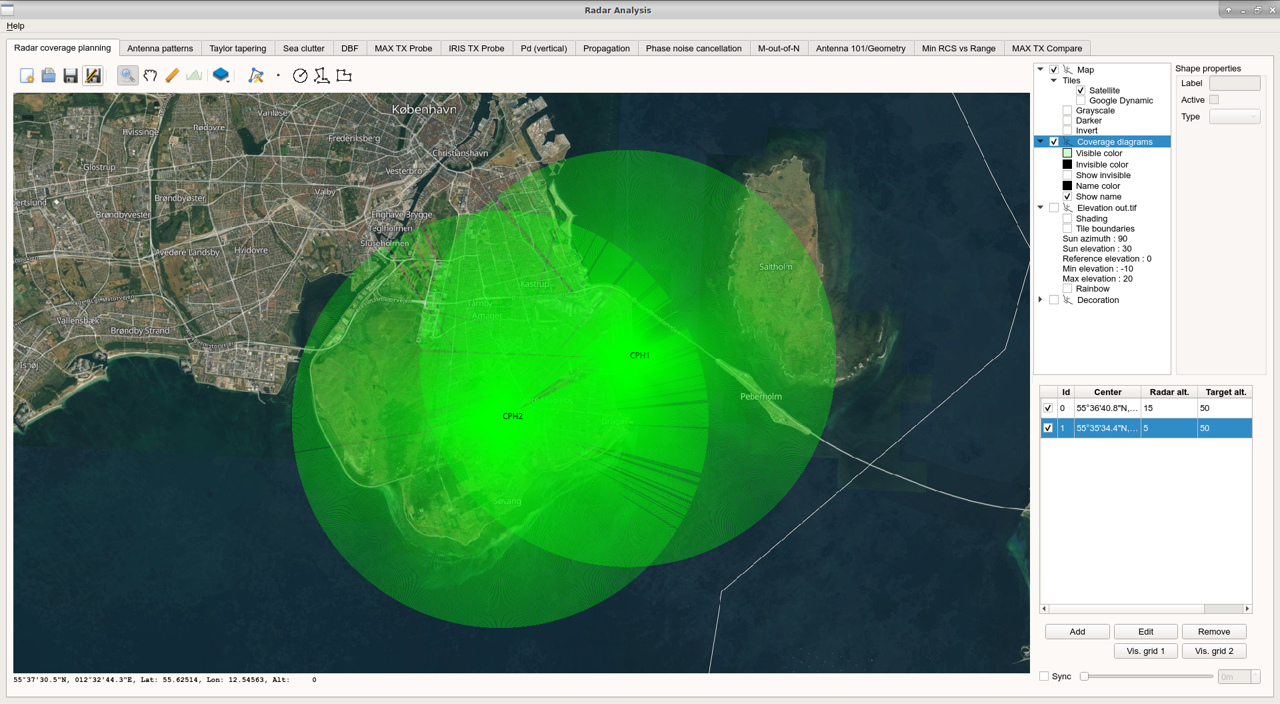
In a long-term effort of collaboration and learning, the enhanced dataset underscores the development of advanced bird-risk management. Key capabilities include:
- Real-time bird tracking with size and altitude indicators, accessible on the wildlife controller’s iPad in the vehicle. This provides wildlife controllers with early warnings about bird movements, enabling smarter decisions on positioning and strategy for successful action.
- Many opportunities to analyze historical data and thereby improve the understanding of birds’ flight patterns.
Bird Radar for Aviation: Setting a New Standard
The setup unlocked an even richer ecological dataset, forging another important collaboration with Aarhus University. Researchers there have been trained in the analytics and interpretation of the radar output.
Their work aims to enhance the radar’s ability to classify barnacle geese and bolster operational safety, as well as answer broader ecological questions.
The detailed metrics the radar captures, such as altitude, speed, heading, and flight path, are paired with field observations. This research holds the potential to build better behavioural profiles and classification models unique to barnacle geese.
In a collaboration that gathers technology, science, and strategy, CPH continues to turn a natural challenge into a data-driven model for significantly safer airspace.
“Copenhagen Airport's dual-MAX system underscores its role as a safety leader.
“By deploying two integrated MAX systems, CPH has achieved the most comprehensive picture of bird activity. This innovative approach, which combines cutting-edge technology with an ecological partnership to study and track bird behaviour, is leading the charge in proactive bird strike mitigation.
“It really demonstrates CPH's commitment to both operational safety and wildlife awareness, and we’re proud to support them.”
Javier Ortiz, Robin Business Development Manager Civil Aviation