The drone threat isn’t static. It’s rapid, autonomous, shifts direction without warning, and evolves constantly to exploit defences. When the threat is this agile, why shouldn’t the response be?
In today’s defence and security landscape, counter-UAS must be mobile.
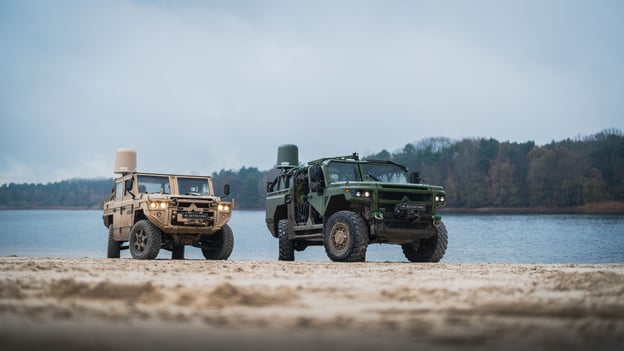
That’s why we’ve partnered with Defenture B.V., integrating IRIS On-The-Move (OTM) across two of the company’s light tactical vehicle platforms – lending our mobile detection capabilities to the GRF and Mammoth.
A partnership with momentum
Specialising in purpose-built, highly mobile tactical vehicles, Defenture is a fellow Dutch innovator delivering safe, agile mobility solutions for field environments worldwide.
With a shared vision of ensuring operational success through mobile, mission-ready capability, it’s a partnership that feels like a natural fit.
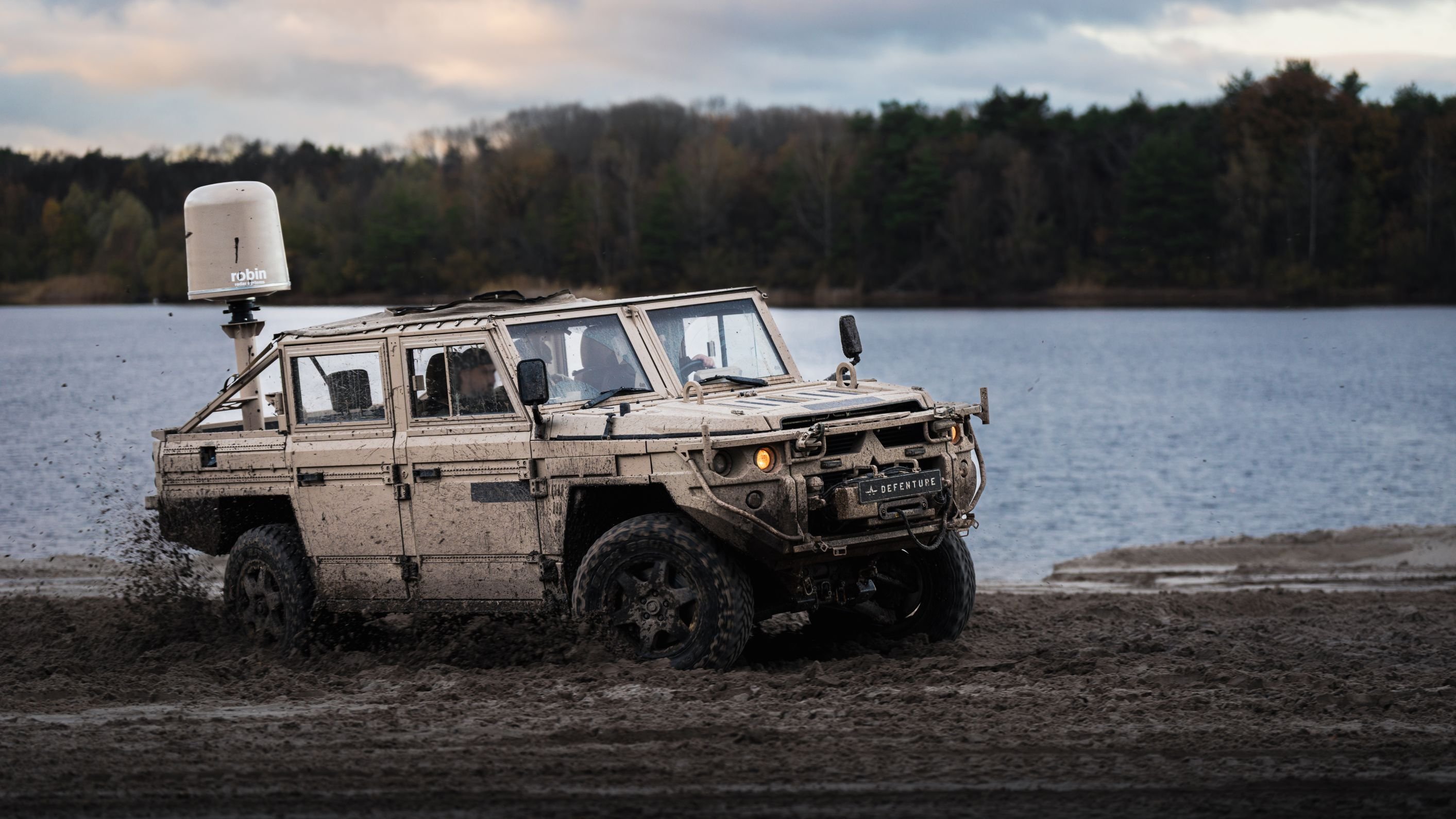
As part of our collaboration with Defenture, we showcased IRIS in rough terrain at Experience Island, Loon op Zand.
The setup highlighted our integration-ready architecture, offering a glimpse of how IRIS supports unparalleled accuracy, early warning, and real-time situational awareness while on the move: a strong match for Defenture’s durable, field-ready vehicles.
The radar’s advanced OTM capability meets the highly mobile designs of the GRF and Mammoth, enabling 360° awareness of drone threats in real-time. This gives ground forces the power to adapt, maneuver, and remain mobile. The flexible counter-UAS solution delivers protection without limiting speed or freedom of movement.
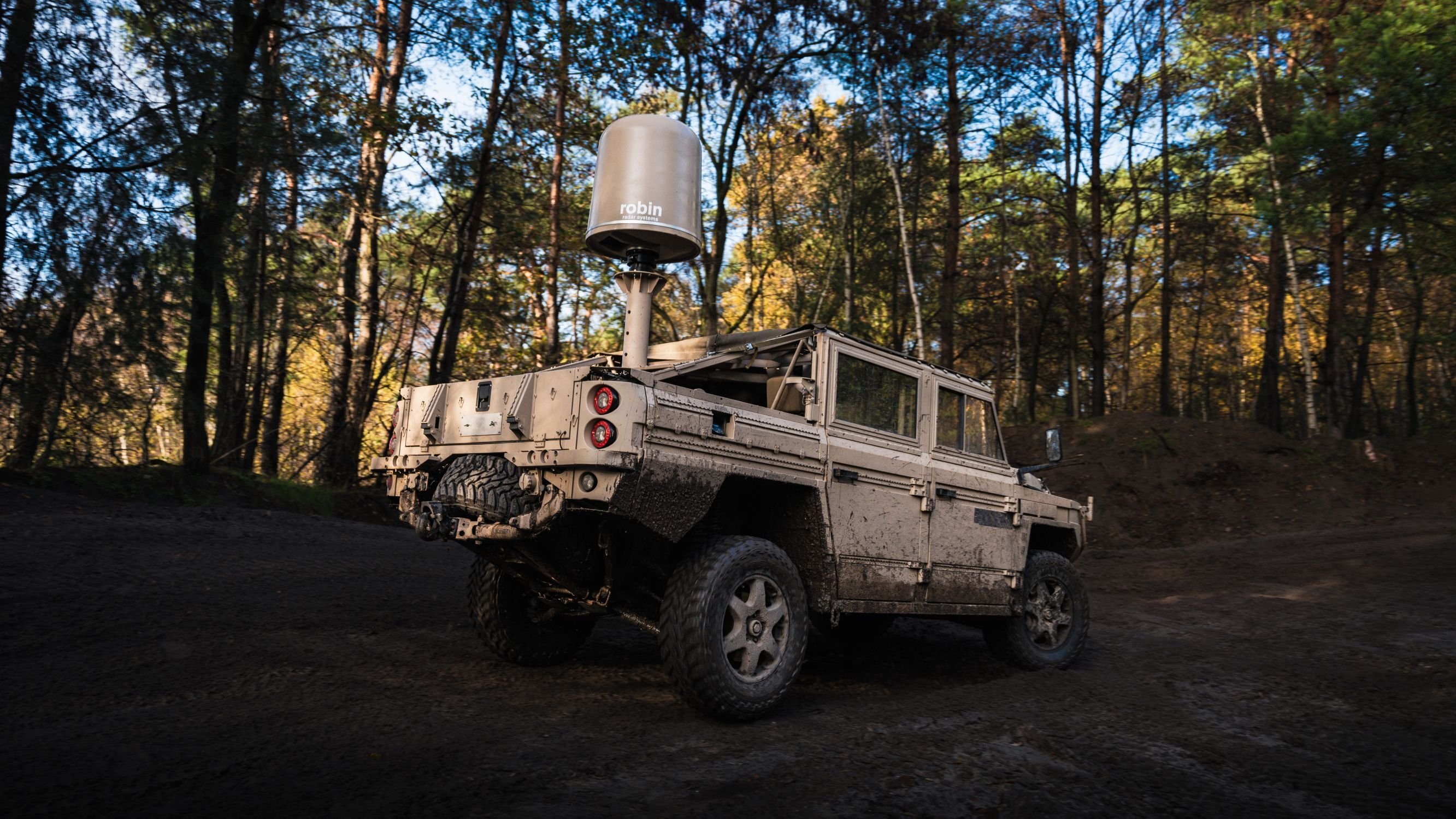
Though IRIS looks at home mounted on Defenture’s light tactical vehicles, what looks seamless from the outside depends on a carefully engineered balance.
IRIS on-the-move (OTM)
In creating IRIS, we didn’t get caught in the trap of innovating for today. We circled back to the drawing board to develop a system ahead of its time. One that could evolve and bend with societal need.
That’s no small feat. When a radar moves, it must factor in constant changes in speed, direction, vibration, and terrain. Without sophisticated technologies that offset the effects of movement, detection degrades, tracking accuracy plummets, and classification gets complex.
We took our systems on and off road to measure our tech against even the most trying conditions. It took hundreds of careful tests across multiple real-world conditions as our engineers wrangled for a truly innovative mix of hardware and software.
And the learning never stops. We rely on rigorous assessment standards and direct, collaborative feedback from clients and partners to keep performance sky-high.
This means continuous operational testing driven by real-world insights, including those gathered in Ukraine, where our vehicle-mounted capabilities have been proven to detect, track, and classify drones at speeds of up to 100 km/h (60 mph).
Today, sophisticated signal processing algorithms, precise motion compensation, careful mechanical and electronic stabilisation, and unique orientation techniques enable best-in-class performance.
Why motion matters: C-UAS on the move
The defence and security landscape is changing fast.
Innovation is critical in keeping up. From OTM capability to software-only updates, like IRIS Long-Range Mode (LRM). A recent breakthrough upgrade that offers the option to switch between 5km (3.1 miles) and 12km (7.45 miles) instrumented ranges in minutes, no hardware changes in sight.
Innovation is critical, but so is its pace. Long innovation cycles and multi-year delivery schedules are no longer enough. Traditional defence timelines don’t match today’s rapid reality.
The market demands agile companies that can innovate, scale, and deliver fast. A new generation of radar company.