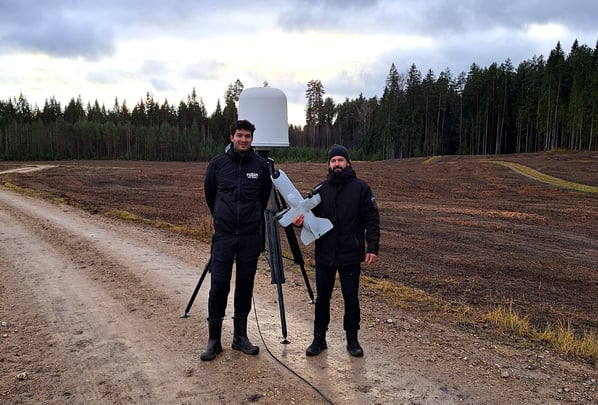
Innovation can’t happen in a vacuum. At Robin, cycles of learning, feedback, and shared expertise are built into everything we do.
And in counter-UAS, collaboration is essential. Here, challenges are complex, the threat landscape shifts constantly, and operational demands change too quickly for any single technology to stand up alone.
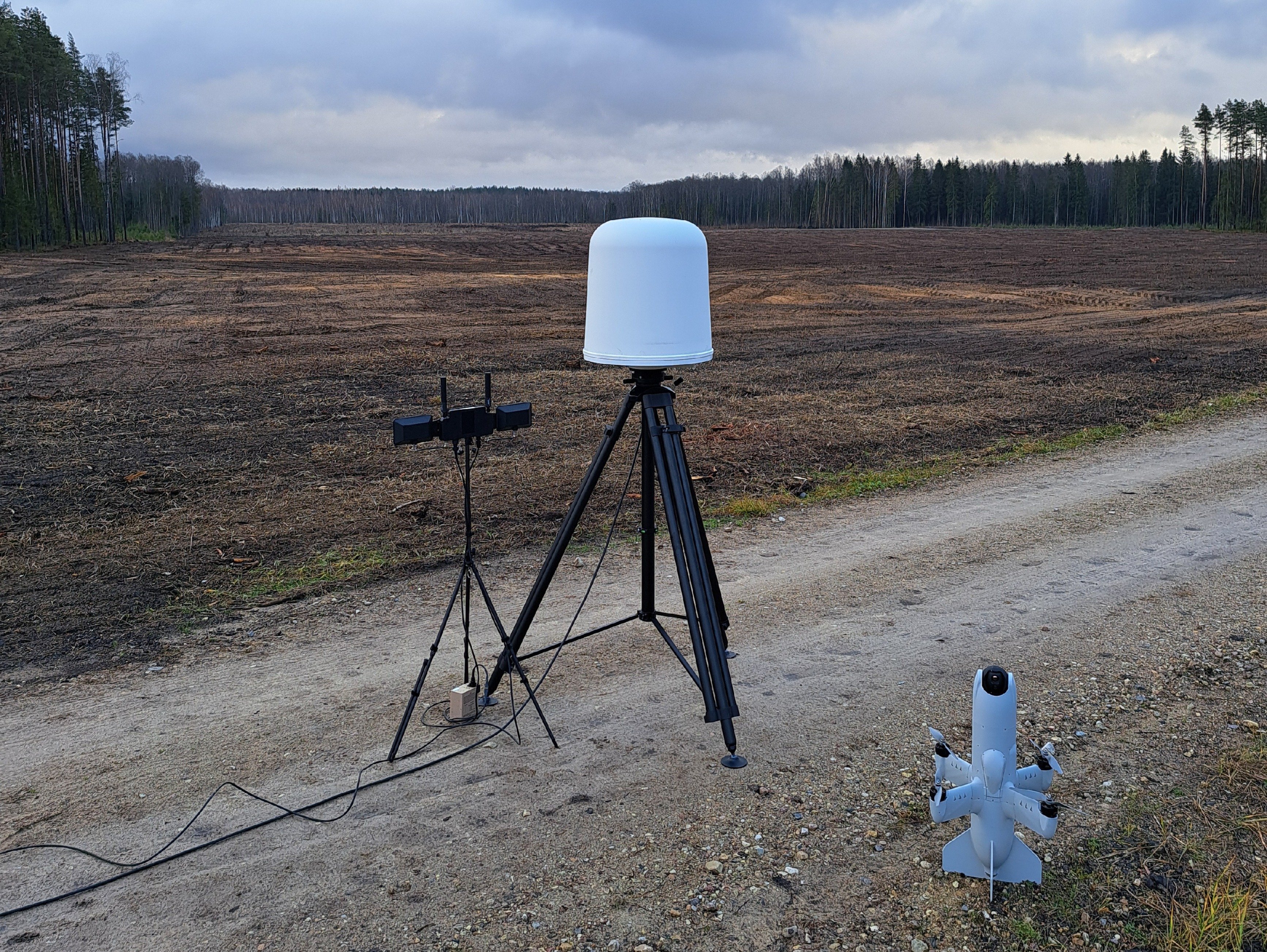
That’s why we join forces with partners like Origin Robotics. It’s how we innovate, integrate, and deliver impact. Paired with our 3D, 360° drone detection system, IRIS, Origin’s Blaze interceptor operates with an additional layer of precision, in real time.
The collaboration combines formidable detection and specialist interception through precession.
Radar-guided drone interception
Origin Robotics has an effective autonomous interceptor drone, designed explicitly to counter aerial threats. What they needed was a sensor capable of reliably detecting and tracking those threats, delivering guidance and position updates fast enough to support interception.
Robin Radar Systems Technical Sales Engineer, Jasper Borghart, explains:
“Origin has a very capable technology, but for the most precise and time-effective interception, you need a sensor that can guide. That’s where IRIS fits naturally: all-around detection, accurate tracking, and data that’s easy to work with.
“IRIS doesn’t need an operator. It just feeds reliable data. You get 360° awareness, rapid update rates, and no additional manpower for calibration or setup.”
Once IRIS detects a drone, it continuously updates the threat’s position, sending tracking coordinates every second to Blaze.
Blaze then launches toward those coordinates, maintaining a link with its ground station while refining its intercept path. When close enough, the interceptor switches to its onboard camera for visual lock, allowing the operator to decide whether to follow, intercept, or abort.
Robin focuses on detection and tracking, Origin on the effector. Together, they form two critical pillars of an integrated counter-UAS system, with command-and-control acting as connective tissue.
Built to Integrate: The Heart of a System of Systems
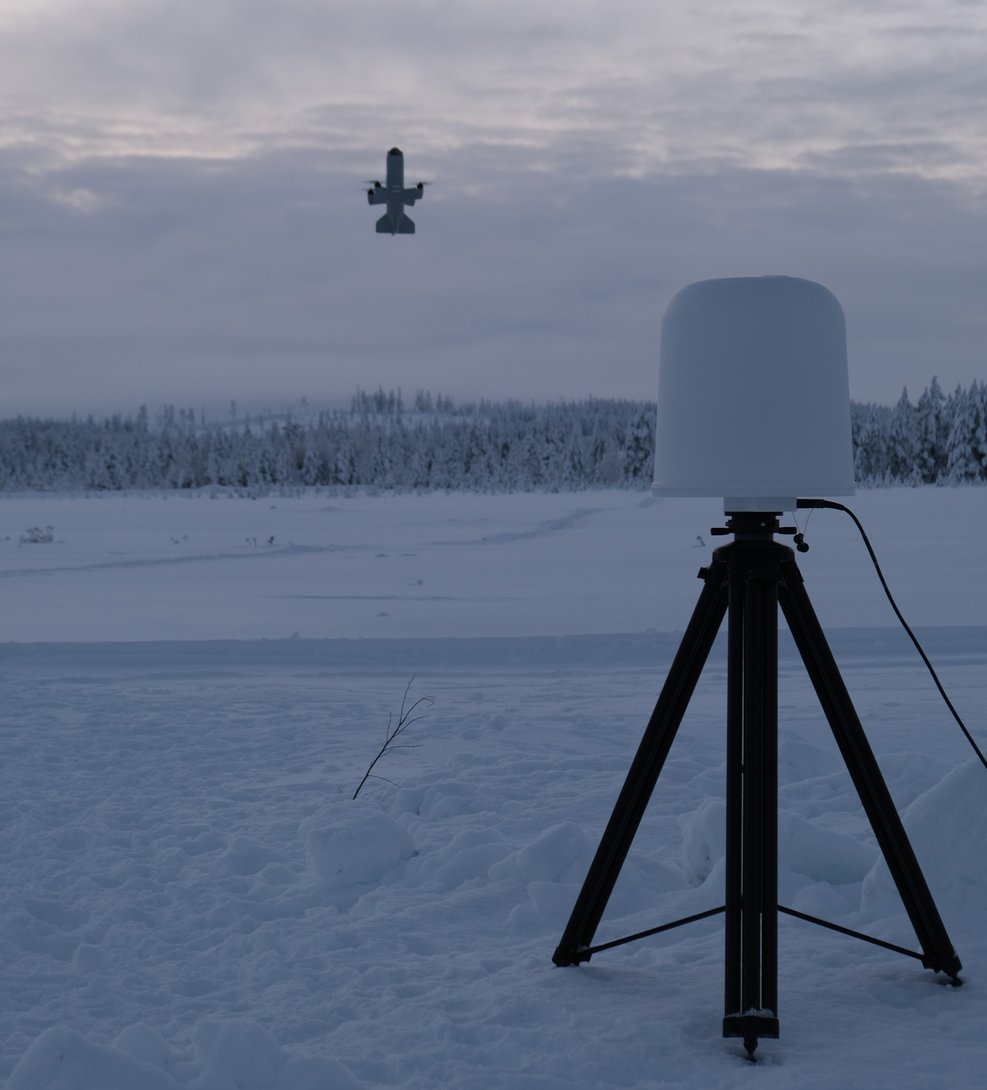
In creating IRIS, we didn’t get caught in the trap of innovating for today. We circled back to the drawing board to develop a system ahead of its time. One that could sit seamlessly within an ecosystem of sensors and effectors.
IRIS was designed from the ground up to be lightweight, easily deployable, and adaptable. It integrates fast, feeding reliable real-time intelligence into command-and-control platforms andsensor fusion layers.
“IRIS outputs GPS coordinates and track data via an array of APIs,” Jasper explains. “That makes integration simple. Whether it’s a C2 system or an effector like Blaze, you’re not locked into a closed ecosystem.”
This kind of openness allows IRIS to plug seamlessly into broader architectures, reducing integration time, lowering operational complexity, and enabling faster deployment of complete solutions.
Collaboration as a CUAS Mindset
Our Origin Robotics partnership is one of many that reflects a broader truth about counter-UAS. The threat evolves too rapidly for siloed development.
The pace at which we innovate depends on continuous integration. Feedback from the field feeds directly into development cycles, enabling rapid iteration and practical upgrades.
Our latest breakthrough, IRIS Long-Range Mode (LRM), is a clear example. The software-only update provides even earlier warning of large, Fixed Wing drones. It allows operators to switch between instrumented ranges in minutes, without hardware changes. It was developed and stress-tested through a significant number of IRIS deployments in Ukraine, where these types of threats have become prolific.
The drone threat continues to evolve, but so does its response. The most effective counter-UAS solutions are forging ahead, propelled by shared expertise and open integration.