When it comes to successful aerial defence, it’s clear there’s no single solution to tackle the UAS threat.
Drones have evolved to become a complex security threat: autonomous, RF-silent, and operating in GPS-denied environments, while being capable of deployment in coordinated swarms over long distances.
Beyond the clear safety challenge this poses, there’s an economic one, too.
Low-cost drones are causing nations to spend millions of dollars on countermeasures to defend against UAS that cost just a few thousand. It’s something we’re seeing daily in the Middle East, as our CEO, Siete Hamminga, has already spoken out on.
So, how can we reliably and sustainably protect people and critical infrastructure?
In large part, the answer lies in layered defence. Building ecosystems that start with accurate detection and classification and end in proportional mitigation, leveraging best-in-class technologies that scale industrially, economically, and technologically.
Not only does this approach ensure a better-informed, more cost-effective solution, but it also encourages closer collaboration between defence organisations and technology providers, facilitating faster innovation cycles and evolving capabilities.
.jpg?width=3572&height=1954&name=RR%20Orb%20(Layered%20cake).jpg)
Why last-mile radar matters
The leading UAS threat today is small drones flying at low altitude in noisy environments. This requires accurate, close-proximity detection by radar solutions adaptable enough to keep pace with the fast-evolving nature of the threat.
At Robin, we lead with innovation to stay at the cutting edge. Our agile C-UAS radar, IRIS, uses micro-Doppler classification to differentiate between distinct motion signatures of birds, drones, and other aerial objects at ranges of up to 12 kilometres, with Deep Neural Network (DNN) technology helping drive continuous iteration and improvement.
As we’ve learned through real-world applications, last-mile detection capabilities are the bedrock of any reliable layered C-UAS system. Defence infrastructure is only as effective as its detection, classification, and tracking.
The importance of integration
We’ve seen first-hand how integrated architecture performs against aerial threats in Ukraine and the Gulf, where Shahed-like drones pose a near-daily threat to civilians and strategic assets. These drones need to be accurately identified early.
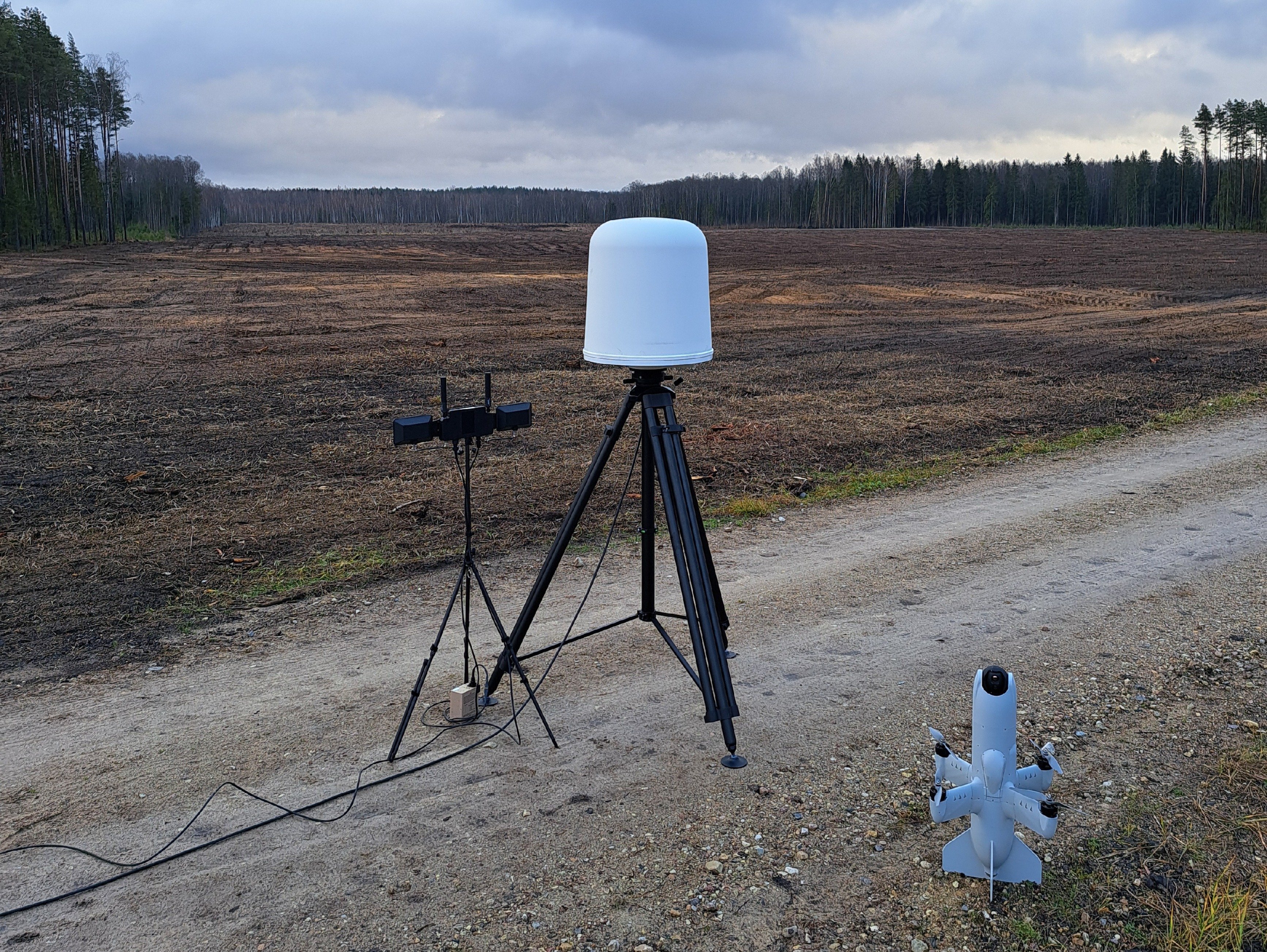
As the first layer of defence, IRIS is deployed in just 15 minutes and integrates with a number of command and control (C2) systems, making set-up seamless. Just as quickly, it can be redeployed, scaling effortlessly to expand aerial defence coverage.
The benefits of early detection shouldn’t be underestimated. By providing accurate, early-stage insights to command and control, decision-making becomes faster, clearer, and more proportional.
Drones can be neutralised cost-effectively using energy systems or electronic countermeasures, instead of expensive missiles – and people and critical infrastructure can be protected with reduced risk.
Ever-evolving capabilities
Layered defence also allows technology providers to focus on what they do best. At Robin, that’s detection, tracking, and classification. We’re constantly seeking to improve our capabilities, collaborating closely with our partners to test and challenge our radars in operational environments.
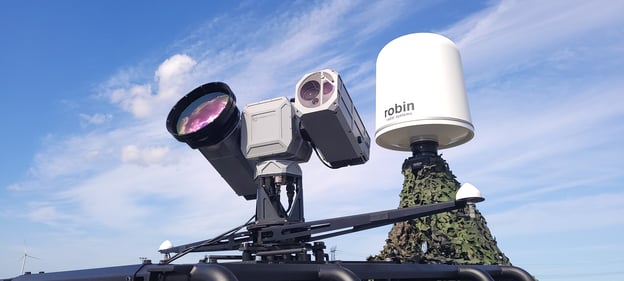
By doing so, our experience in the field has allowed us to make rapid improvements like extending our instrumented range to 12 kilometres with Long-Range Mode (LRM) and making our radar mountable for on-the-move (OTM) applications, such as vehicles.
Ultimately, effective aerial defence is best tackled collaboratively. To protect the most vulnerable among us, technology providers must innovate and integrate, evolving at the speed of the threat to ensure safer skies today, for the benefit of tomorrow.